

Technical Architecture of Cellular IoT Enabled Remote Sensing and Geographic Information System
The Cellular IoT Enabled Remote Sensing and Geographic Information System integrates IoT-enabled sensors, cellular gateways, and GIS platforms to provide actionable data for applications like environmental monitoring, disaster management, and urban planning. Sensor data flows through cellular networks to edge processing devices or cloud servers, where advanced GIS tools analyze spatial data for visualization and decision-making.
For GIS-related standards, see the Open Geospatial Consortium (OGC) and ISO 19115 Metadata.
Hardware Components
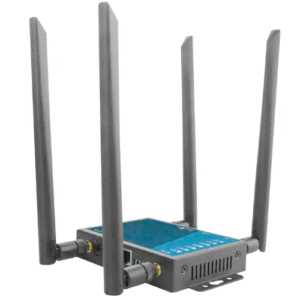
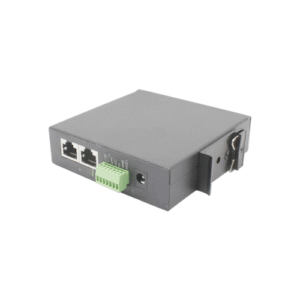
- Cellular IoT Gateways: Transmit sensor data via LTE or 5G.
- Remote Sensors: Includes LiDAR, multispectral, and environmental sensors.
- Edge Devices: Pre-process data before transmission to servers.
- Antenna Systems: Facilitate robust long-range communication.
- Local Servers: Handle data storage and GIS processing.
- Battery Systems: Backup and solar-powered solutions for remote areas.
- Drones: Often equipped with IoT modules for aerial data collection.
Physical Placement Considerations
- Signal Coverage: Optimize locations to maximize cellular network availability.
- Elevation Requirements: Ensure proper sensor positioning for accurate data capture.
- Environmental Durability: Use weatherproof sensors in challenging conditions.
- Access Points: Maintain placement to facilitate periodic hardware servicing.
- Interference Zones: Deploy sensors away from high electromagnetic interference.
For information on sensor durability, consult NIST’s IoT Guidance.
Hardware Architecture
- Sensor Layer: Collects geospatial and environmental data.
- Communication Layer: Cellular modules securely transmit data via LTE/5G.
- Edge Computing: Performs on-site data aggregation and filtering.
- Data Integration Layer: Processes spatial data in GIS platforms.
- Visualization Layer: Outputs analyzed data as interactive maps and reports.
Deployment Considerations
- Compliance: Align with FCC Part 15 Regulations and NIST Cybersecurity Guidelines.
- Interoperability: Ensure compatibility with industry-standard GIS platforms.
- Energy Efficiency: Leverage low-power modules and renewable sources.
- Maintenance Access: Design for routine inspection and servicing.
- Resilience: Plan for redundancy in data transmission to prevent outages.
Relevant Industry Standards and Regulations
- ISO/IEC 30141
- ITU-T Y.2060
- IEEE 802.15.4
- GDPR Compliance
- OGC Standards
Local Server Version
The Inventory Master’s local server option offers secure data storage and processing for environments where cloud access is limited. Sensors relay data to on-premise servers equipped with GIS software for advanced analysis. This solution is ideal for organizations requiring full data control while meeting strict regulatory requirements.
For further details on server standards, review ISO/IEC 27001 Information Security.
Cloud Integration and Data Management
Cloud integration in The Inventory Master’s systems ensures real-time access to sensor data. Solutions include:
- Scalable Storage: Utilizing platforms like AWS or Azure for high-volume data.
- GIS Analysis: Hosting geospatial applications for advanced modeling.
- Data Encryption: Compliance with FIPS 140-2 for secure transmissions.
- Disaster Recovery: Cloud backups ensure business continuity in emergencies.
Learn more about cloud-based GIS platforms through Esri’s ArcGIS Overview.
This architecture, when paired with The Inventory Master’s stringent quality assurance and expert support, ensures cutting-edge solutions for remote sensing and GIS applications.
GAO Case Studies of Cellular IoT Enabled Remote Sensing and Geographic Information System
Case Studies in the USA
- Los Angeles, California
An air quality monitoring project used IoT-enabled sensors to measure pollution levels. GIS tools helped identify spatial trends, guiding mitigation strategies. Cellular IoT technology ensured reliable data transmission. Learn more about air quality applications of GIS at EPA’s Air Quality GIS Resources. - Houston, Texas
IoT sensors were deployed along flood-prone waterways to improve disaster readiness. GIS platforms processed the data for predictive analysis and visual mapping. For insights on flood management with GIS, refer to USGS Flood Science. - Chicago, Illinois
Urban heat mapping initiatives leveraged IoT networks to gather temperature data. GIS visualization identified areas for infrastructure enhancements. See examples of urban GIS solutions at ESRI Urban Analytics. - New York City, New York
Drones equipped with IoT systems conducted structural inspections of skyscrapers. GIS tools tracked and mapped real-time data. Learn more about drone GIS integrations at DroneDeploy’s GIS Applications. - Miami, Florida
IoT-enabled coastal sensors monitored erosion and water quality, aiding GIS-based shoreline mapping. Explore related coastal applications on NOAA’s Digital Coast. - San Francisco, California
Seismic monitoring systems integrated IoT sensors and GIS to assess fault-line activity, enhancing emergency response planning. See seismic GIS examples at USGS Earthquake Hazards. - Seattle, Washington
IoT sensors in forests provided environmental data, analyzed through GIS tools to identify affected areas by pests and climate changes. For more on forestry GIS, visit ForestGIS Resources. - Phoenix, Arizona
Aquifer monitoring using IoT sensors connected with GIS tools supported sustainable water management in arid regions. Learn about GIS in water management at USGS Water Data. - Denver, Colorado
IoT and GIS technologies optimized smart city traffic monitoring systems by visualizing congestion in real-time. See GIS traffic solutions at ESRI Smart Transportation. - Atlanta, Georgia
Stormwater management systems employed IoT for flood detection, and GIS tools mapped risk areas. Explore stormwater GIS projects at American Rivers. - Boston, Massachusetts
IoT systems monitored building energy efficiency, and GIS analysis pinpointed wasteful consumption patterns. Learn more at DOE Energy Management GIS. - Detroit, Michigan
IoT emissions sensors supported industrial air quality monitoring, analyzed through GIS to identify spatial impact zones. Refer to EPA Environmental Monitoring. - Las Vegas, Nevada
Weather data from IoT stations were integrated with GIS to provide microclimate insights for urban planning. See applications at NOAA Weather Data GIS. - Portland, Oregon
IoT-enabled water quality monitoring systems visualized pollutants using GIS to guide cleanup operations. Learn more at USGS Water Quality. - New Orleans, Louisiana
Levee monitoring IoT sensors assessed structural health, and GIS mapped potential failure points. For insights, visit FEMA Flood Hazard Mapping.
Case Studies in Canada
- Toronto, Ontario
IoT sensors and GIS platforms managed urban heat islands, guiding infrastructure planning. Explore Canadian GIS initiatives at NRCan Geospatial Data. - Vancouver, British Columbia
Forest fire monitoring utilized IoT and GIS to predict risk areas, enabling timely interventions. Learn more about wildfire GIS applications at Canadian Wildland Fire Information.
The Inventory Master’s cellular IoT solutions ensure seamless integration and operational excellence in all these deployments. For a deeper dive into our offerings, visit The Inventory Master’s Remote Sensing Solutions.
Navigation Menu for Cellular IoT:
Cellular IoT Home Page
- Cellular IoT Accessories
- Cellular IoT Devices
- Cellular IoT – Cloud, Server, PC & Mobile Systems
- Cellular IoT Resources
Navigation Menu for IoT
IOT Home Page
- LORAWAN
- Wi-Fi HaLow
- Z-WAVE
- BLE & RFID
- NB-IOT
- CELLULAR IOT
- GPS IOT
- IOT SENSORS
- EDGE COMPUTING
- IOT SYSTEMS
Our products are in stock and can be shipped anywhere in the continental U.S. or Canada from our local warehouse. For any further information, please fill out this form or email us.
We are actively looking for partners who are like us located in the U.S. and Canada. For more information on partnering with GAO, please visit Partner with The Inventory Master Inc. It lists various ways to partner with GAO, such as OEM Partnerships, Technology Integration, Distribution and Reselling Opportunities, Presenting at the Leading Event Tek Summit, Joint R&D Projects, Training and Consulting Services, Industry-Specific Collaborations, Research and Academic Partnerships.


Reviews
There are no reviews yet.